Activism in the Age of Covid-19

Source: Photo by Ben den Engelsen on Unsplash

by Thomas Sneha Sharon


Activism has been a cornerstone of civilisation from the beginning of time. It is born of the intrinsic human desire to create change for the perceived better when communities of people deem their current social, political, economic, and/or environmental conditions to be unsatisfactory. Campaigning for a revamp of the status quo allows civilians to engage in a tug-of-war with their authority figures over state activities and structures that they believe are to their detriment; to reclaim their power and assert influence over the happenings of the state.

Now, picture how the physical manifestation of activism typically looks like. For most, the images of throngs of people closely packed together, holding signs and shouting a rallying cry come to mind. But how does this play out in the Covid-19 era, where over a hundred countries have been or currently are in lockdown and avoiding crowds has become the norm?

Paradoxically, socially-distant 2020 has become a defining year for activism. Global protests for racial justice stemming from the American George Floyd protests, International Women’s Day protests and the Belarusian protests are but a few of the defining social movements of this year. An explanation for the rise in the number and scale of such protests is that Covid-19 is a historic ‘trigger event’. It has led to widespread confusion and chaos as communities and countries struggle to navigate today’s especially uncertain landscape. However, having to uproot entire ways of living has also made people more aware and intolerant of harmful and/or ineffective state structures and activities. This drives them to seek change more so today than during relatively stable times.

Many key protests today, like global movements against racial injustice, still have the physical gatherings of people as a key tenet of their campaigns. However, the pandemic has certainly imposed limitations on this traditional aspect of galvanising social change. Israeli opposition protestors maintained a distance of six feet from one another as they took to the streets and Poland’s women’s rights activists “marched” as they stayed in their vehicles. As the risk posed by Covid-19 to public health continues to linger and the number of coronavirus cases globally continue to surge, social movements have had to shift away from pursuing traditional street protests as a campaign strategy.

As a result, online activism has seen a considerable rise in participation, as protestors gather virtually to circumvent the physical limitations of their campaigns. For example, Hong Kong activists have spread pro-democracy messaging through the online “Animal Crossing” game. They have also conducted virtual rallies with music broadcasts to thousands of viewers, a significant number of whom are international participants. The emergence of racial justice protests globally has also been attributed to American social media activists and ordinary civilians flooding social media timelines with background context and information about the George Floyd protests. Without the pervasive online activism that took place following the death of George Floyd, it is safe to say that the global conversation and protests surrounding racial injustice would not have gained as much traction.

While online activism has been a crucial part of social movements since the 2010s, they have become much more pivotal to the impact of activist campaigns due to the physical limitations Covid-19 has imposed on the world. As the coronavirus persists, online activism will continue to serve as a bridge for us to communicate with each other our ideas for change as we attempt to emerge from this crisis and seize this opportunity to create a better world. Humankind may have become physically disconnected from one another but our dreams for a brighter future transcend geographical boundaries and unite us in spirit.

References:
https://www.usip.org/publications/2020/04/amid-coronavirus-online-activism-confronts-digital-authoritarianism
https://theconversation.com/global/topics/social-movements-34148
https://www.bbc.com/news/world-52103747
Automation

by Pranay Mathur


If you’ve been to a job fair recently, you would know that machine learning and artificial intelligence are some of the hottest fields to work in right now. For businesses, they promise greater productivity. However, this comes at the expense of many human workers becoming redundant.

The phenomenon of automation isn’t new. Cars replacing horse driven carriages was in a sense a form of automation. But in the past decade, there has been an exponential rise in computer processing power that has been accompanied by the development of increasingly sophisticated algorithms. Tasks such as speech and image recognition, which were once thought too abstract for computers, can now be performed by tiny smartphones that fit in our pockets. Self driving cars are already safer and more reliable than their human-driven counterparts. Computers can make meaningful inferences from textual data from the news, and make investment decisions accordingly. Even creative tasks such as producing artworks or composing original music can be done by computers. The point I am trying to make is not that computers can already do all these amazing tasks, but that the rate of change is rapid, and even though it may feel like you are far ahead of computers at doing your job, computers may not be far behind.

But, as I have said before, automation is not exactly a new problem. In the past, jobs have been erased by machines, but new, better jobs came up to replace them. Sure, the early computers made some clerical work redundant, but they also gave rise to entirely new industries such as video games, online publications, software engineering and so on. This is true, and I expect something similar to happen after the current wave of automation as well. However, the creation of these new jobs is always accompanied by a time gap, a skill gap and a geographic gap. Simply put, new jobs will not be created as soon as the old ones are replaced, the people who lose their jobs will not have the skills to perform these new jobs and these new jobs will not necessarily come up in the same towns or cities where people have just lost their jobs.  Sure, in the long run society will adapt to the changes AI and automation will bring. But, the transition period over the next decade will see a lot of people find themselves unemployed without a clear way to get back on their feet.

One solution is to regulate new technology. However, this is highly impractical. Computers are more cost-effective and less prone to errors than human beings. Businesses will prefer to automate as much as they can and will make it incredibly difficult for such legislation to go through. Another, slightly better solution is to retrain the workforce to adapt to newer jobs. This approach also has its fair share of problems though. Many people in the older generation have not attended any classes in decades and will be hesitant to spend time upskilling. The logistics of developing a course and teaching it to large parts of the adult population is also not an easy task. That said, reskilling does seem to be the best bet to survive the current wave of automation.

To summarise, automation is going to significantly impact our careers, but we can still be successful if we are willing to always be learning and have an open mind with regards to exploring new career paths.

References
https://www.channelnewsasia.com/news/singapore/pursuit-of-technology-what-happens-to-workers-skills-11309094
https://willrobotstakemyjob.com/highest-risk-jobs
https://www.theatlantic.com/education/archive/2018/01/the-false-promises-of-worker-retraining/549398/
https://www.edb.gov.sg/en/news-and-events/insights/manufacturing/automation-in-manufacturing-help-workers-ride-the-change.html
https://www.vox.com/videos/2017/12/19/16792294/artificial-intelligence-limits-of-ai

Recognizing Our Privilege By Understanding Those Who Don’t Have It

by Najiha Puteri


As you may have heard from Humanitarian Wing, “Project Meraki” is a student-initiated overseas project where volunteers go overseas to Kuala Lumpur to visit three Refugee Schools for volunteer work. As accommodation and meal expenses are heavily covered by generous grants by the university and our own fundraising efforts around campus, it is a great opportunity for us to understand first-hand about the situation of the community- as we get to experience for ourselves interacting with a community where they are not granted citizenship and rights that come with it.

POLITICAL : One of the most persecuted refugees in the world are the Rohingyas. These are minority groups originated from predominantly Buddhist, Myanmar, and the state’s mistreatment has led them to forms of genocide, killings or even persecution. Because of this, Rohingyas are generally being taken in by Southeast Asian countries nearby, such as Malaysia, Thailand and Indonesia. As humanitarian as it is to take in stranded Rohingyas on a boat as they were removed off their own home, we cannot be very certain that these states are willing to take them in in the long run. In Thailand, their border would be heavily protected by insurgents. They watch over the new arrivals of these refugees, almost as if there is a reluctance in bringing them in.

EXPERIENCE: As I used to be part of the Humanitarian Wing, some of my team members and I visited the three Myanmar Refugee schools for Project Meraki. We spent most of our weekdays interacting with the kids ages from 5-18, a very huge range of kids. On Saturdays we brought them outdoors games to introduce them to Robotics for the pre-teens. We also taught them basic hygiene such as brushing their teeth for all, and like any other stereotypical Singaporean teacher would do – reinforce rules and set instructions on what to do and what not to do in a classroom environment (picture of poster)
It was a great to see the energy we see in the kids whenever we came over. As a tutor, there was a certain deference they paid to me simply because of the age gap, and being a tutor person at Primary level math, science and English it was definitely helpful. It was great working closely with my team and with the kids, their parents and the whole community even for a short period of time.
My job as a translator for the team and kids was the most challenging. However, it really did give me the chance to understand where these refugees were coming from knowing that they spoke Malay like I do. I think some students that caught my attention the most was the way they talked down on some of the girls, and teenage boys would ask some of us how old we are, and some follow up questions relating to marriage.

CULTURAL : There’s not enough empathy on both sides of the community – to appreciate their own womenfolk even whilst being domesticated and financially dependent, and there are also many factors to consider when it comes to my observations – it is limited to what I have seen, what I have heard from Rohingyan women and the general impression that I have… Personal trips with them by taking them out to the mall, eating at cafe and watching Spidermovie – there were some instances where even the sight of the boys walking in to store invited a lot of glares and stares from the workers there. One time, two of my colleagues, went out with two of the refugee boys we used to teach – 18 and 13 respectively.
Across all three schools that I visited – I notice there is a strong tendency to use the rattan cane as a physical form of punishment for the kids. Bad behavior is usually corrected by the headteacher (regardless of gender). That was quite unsettling – after hearing my team members describing how they witnessed it while they were tutoring them in class.

PERSONAL:
In summary, I find it quite difficult to understand the situation with the Rohingyan community – the cultural side of things, especially where it aligns their women differently from men and the domestication of women to stay in their homes (safety are exceptional cases). I know of that issue by the refugees I visited are likely going through a lot of problems in their community, from domestic abuse, to children not attending school and early child marriages. In one of the schools I visited, the head teacher always told me that sometimes even parents think that education shouldn’t be much of a priority, because they are in-transit. This means that they know that they are living in Malaysia temporarily, hence once they resettled they would have to give up their studies. So therefore they don’t wish to spend on something that won’t be followed up in the coming years.
I remembered in one kindergarten school, where the headteacher, who runs the school on her own with girls, once they have reached puberty, marked by their first menstruation would mean they would have to be removed from school and get themselves married off. It was very telling in terms of their attitudes towards their womenfolk, and the questions I was asked by the teenagers’ boys in class about my marital status at 22 years of age already spoke volumes about how they’ve seen me.
As they are Muslims themselves, a part of me resonated with them – as if we do belong in the same community – though I would say I am privileged, in a way where communities are generally supported by government, we have self-funding organizations that support young children with mentors, awards for doing well in and outside of school, and giving recognition to minorities despite the systematic limitations that comes from being a minority. It’s not perfect, but in comparison to another Rohingyan refugee who’s 23 like, because of her status of lack of citizenship it puts her in a different type of situation – where such opportunities may be limited. However, this can change by several ideas that could be a way to start things off.
1) Teaching the basic fundamentals – English
2) Using English to learn the Internet, Google Translate
3) Freelance jobs to work from home using Wifi
4) Successful business likes PichaEats as a great way for refugee women to make food and earn an income through consumer purchases

Whatever is mentioned here are some of my own personal observations throughout the Meraki trip with other Humanitarian Wing team members this year and last year. I think the issues within the community that I visited had their own set of problems, which are complex in nature, because their refugee status and their culture is like an ecosystem that’s hard to really figure it out. Fortunately, there have been generous donors who are providing monthly contributions to the 3 main schools we visited, in order to pay their bills. My personal stand on this is that there are many people out there who needs our helps in providing solutions to a list of problems they face. Money can solve a lot of problems, but sometimes, as a person who is enjoying a lot of priveleges from simply being Singaporean, we can also offer practical help when in need – we just need to recognize them as people deserving of citizenships like you and me, and offer them a way to make their lives easier and smoother while they are waiting for a new country to call it their homes.

Some links:
https://www.facebook.com/AlIkhlasHopeSociety/
https://www.facebook.com/SfTomorrowKL/
http://e-lluminate.my/blog/projects/matu-social-organisation-mso-school/

The Vaccine Problem

by He Yinan


“Measles now a public health emergency with a surge of those infected. Measles is back in the US.”  These are the first two lines of a news article in April 2019. So, what is measles? Measles is a very contagious respiratory infection, that cause a total-body skin rash and flu like symptoms. Since measles is caused by a virus, there is no specific medical treatment for it. The good news is that there is a vaccine for measles. The MMR vaccine can effectively prevent measles. In fact, more than 93 percent of people who get the first dose of MMR develop immunity to measles. After the second dose, up to 97 percent of people are protected. With the help of MMR, measles was declared eliminated in the US in 2000. Since there is an effective vaccine for measles, why is it coming back?

The attention has been focused on the anti-vaccine movement. An increase in number of people refusing to take vaccine has caused a health crisis. Anti-vaccination sentiment is growing fast in the US due to various reasons. Some people believe vaccinations may be harmful and it is not necessary to take vaccines, as the risk of contracting vaccine-preventable disease is so low. Others are due to religious reasons or conservative thinking. The problem is, as more people are unprotected against the virus, there is an increase in people contracting the disease and spreading the disease to those who are unable to take the vaccine, causing a significant increase in the outbreak cases.

The anti-vaccine group is only a minority, the larger group is the ‘vaccine hesitant’. This group of people intentionally delay or deviate from the routing schedule, staggering vaccine administration according to their own timeline. This leaves children vulnerable to diseases for a longer time and puts their community at a higher risk for outbreaks. 

The problem is not simply because of anti-vaccine movement and the vaccine hesitant group. Even with people against vaccination, developed countries are still doing well in immunization. Developing countries in Africa, parts of Asia, and in the Middle East also have a vaccine problem. For example, in Nigeria, only a third of the population received the third dose of DTP vaccine (diphtheria, tetanus toxoids and pertussis) while 85 percent of rest of the world have received their vaccination. This situation is largely related to the poor infrastructure in these countries. Poor countries often lack the electricity which is needed to keep vaccines refrigerated, causing the vaccination rate to be much lower than the rate required to prevent the disease. 

Thanks to the organizations working on vaccinating the children in developing countries, the situation in poor countries have been more optimistic. Vaccination not only protect ourselves from diseases, it also prevents the spread of diseases. Thus, it is encouraged for people who are able to get vaccination to be vaccinated, to protect themselves and also protect those allergic to the vaccine, or too young to receive the vaccine, or anyone who is not able to receive the vaccine.

References:
https://www.businessinsider.com/vaccine-problem-anti-vaccine-movement-united-states-explained-charts-2019-4?IR=T
https://www.mayoclinic.org/diseases-conditions/measles/expert-answers/getting-measles-after-vaccination/faq-20125397
https://www.pbs.org/newshour/science/how-bad-is-the-measles-comeback-heres-70-years-of-data

Unsung heroes of Singapore.

Source: http://www.todayonline.com

by Dilip Balakrishnan


Xenophobia has become very ubiquitous. As major world powers such as the UK and US are dealing with the issue of immigration, the common sentiment that keeps surfacing is the disdain for immigrants. This should prompt us to examine the way immigration is treated and the way we are dealing with it in our own backyard, Singapore. There is a substantial number of blue collar foreign workers in Singapore who toil hard for our nation. They tend to come from neighbouring countries in the region, and often take up jobs in construction or serve as foreign domestic workers. Due to Singapore?s strong currency, they are able to earn a great amount of money which eases their financial struggles back home. However, are their lives truly better off in Singapore?

In Singapore, many of them often face discrimination and poor living conditions. 

As foreign domestic workers are staying in their employers’ homes, employers have the liberty to be abusive and to get away with it being unseen. Construction workers are living in dormitories that are unsanitary and overcrowded. Some of these workers are not receiving enough food for them to be able to perform their labour-intensive duties. What’s worse is that Singaporeans are not treating them with basic dignity and respect. When construction workers step into trains or buses, Singaporeans tend to avoid them and also show their distaste by pinching their noses. As most Singaporeans sit in their cushy jobs, they fail to consider the plight of these workers who are going through such immense hardship to ensure that our society runs smoothly.

However, not all hope is lost in this seemingly dire situation. Non-governmental organisations (NGOs) such as TWC2 and HOME are championing for the improved rights of these marginalised workers. In addition, government policies have also been changing to ensure that these workers are better protected. For instance, the government has mandated that employers are to provide their foreign domestic workers with leave days on Sunday. Unfortunately, we are still left to wonder if we are truly doing enough to improve the working and living conditions of these workers. 

How do we do better for the marginalised workers? We can start by treating them with basic dignity and respect. It is so obvious that we should treat everyone around us with dignity and kindness, but many seem to forget that the workers are also human. Let’s do better.

References for further reading:
1. https://lkyspp.nus.edu.sg/gia/article/foreign-domestic-workers
2.https://www.channelnewsasia.com/news/singapore/company-directors-fined-poor-living-conditions-foreign-workers-11470982
3.https://www.asiaone.com/singapore/rich-singapore-why-must-migrant-workers-go-hungry
4.https://www.todayonline.com/singapore/foreign-domestic-workers-singapore-seek-help-most-overwork-verbal-abuse-pay-related
5.https://sg.news.yahoo.com/singapore-foreign-domestic-workers-vulnerable-135242316.html

Catalonia’s Independence

Source: Pau Barrena (AFP)

by Eneko Rodriguez Plaza

Wednesday this week, September the 11th, marked as every year the festivity called “La Diada” in Catalonia, the easternmost region of Spain. This day is to remember the defeat of the former Kingdom of Catalonia when conquered by Spain in 1974, thus annexing it to the Crown of Spain. Although it may seem weird to celebrate a defeat, the purpose is simply to look back and realize there was a time in which Catalonia was independent. 

Despite having celebrated this date for over a century now, it has gained much more weight in the last five years, as pro-independence movements raised significantly since then. The people of Catalonia, with their own language and culture, have always been trying to achieve a bit more freedom they feel they deserve, due to their differences and history, and expected Spain to understand their aspirations as a nation. However, over the last ten years, these thoughts evolved, demanding more and more self-government. Spain’s ministries have constantly denied for Catalonia to gain significantly more sovereignty over their laws than any other region of Spain has, alleging that these “favoritisms” would lead to discontent among the citizens of the other regions.

The more the central government denied Catalonia’s demands, the more the pro independence movements radicalized, leading up to a voting in October 2017 in which the Catalan people could express their desire whether or not to remain a part of Spain. This, however, came with many issues. Firstly, such a voting is illegal (same as in most other countries, one simply cannot organize a voting to divide the country). Secondly, and although the population is more or less split between pro and against independence, the latter did not vote in its majority, arguing that the voting was illegal and thus boycotting it, because the results were obviously then skewed in favor of independence, invalidating them and thinking the Catalan government would not declare the independence of their territory based on that outcome. Nevertheless, Carles Puigdemont, the president at the time, did make an institutional move towards declaring independence.

The response by the central government was overwhelming: the brutality of the police reinforcement covered the headlines the day after the voting, embarrassing the country and its citizens, regardless of their opinion on the subject. The president at the time did not apologize for what happened and ended up resigning from his post a few months later. More drastically, all of the politicians that were involved with organizing the voting and the declaration of independence were jailed. Carles Puigdemont, for instance, exiled in Waterloo, is to be imprisoned the second he crosses the border. 

Even with the new leftist president, who promised to take action on the issue with Catalonia, the situation remains stalled: the judgement of the politicians is solely on the hands of the supreme court, and the central government in Spain cannot interfere with it. The only way to change the situation would be to change the laws, yet this would divide the citizens of Spain and cause any party involved to plummet in the next elections. Many interests are in conflict in this situation, and each day that passes without a viable solution increases the discontent of Catalonian citizenship.

Dead Men Tell True Tales

by Gan YiJie


‘The dead are more honest than the living.’

Sometimes, the death of a person can reveal a lot more about society than the sugar-coated words of the living. With the increase in number of suicides in Singapore from 361 in 2017 to 397 in 2018, one should be concerned about the underlying issues that Singaporeans face. One can even argue that suicides are likely to rise in the future due to changes in societal norms. I will now dwell into the reasons for making this argument.

1. Rising number of elders that live alone

A large proportion of Singaporeans who commit suicide are aged 60 and above. Out of 361 suicides that occurred in 2017, 129 of them were 60 and above. Furthermore, 83000 elderly are projected to live alone by 2030, a sharp increase from 47000 in 2017. This is mostly due to Singapore’s ageing population as a result of better healthcare. Remaining single is also becoming an increasingly common choice. This will no doubt expose more elders to the threat of suicide in the future.

2. A highly competitive economy

In the past, good college grades alone could allow Singaporeans to secure a job and live a stable life. However, as college became more affordable to the populace, competition has grown so intense due to the abundance of college graduates. Besides good grades, one must also invest a significant proportion of their time in co-curricular activities just to obtain a decent job. This is worsened by Singapore’s dismal economic growth of only 0.1% in the 2nd quarter of 2019. There are limited jobs available to a large pool of graduates. Hence, it’s not difficult to see why some students may choose to end their lives given the overwhelming amount of stress. 

With that said, I believe Singapore must do more to create a society tolerant of mental illnesses. This is especially so in a society where more than half of the population are not willing to live with or work with a mentally ill person. Schools should discuss more in detail about mental health during civics and moral education classes. Besides teaching students to seek help when needed, teachers should encourage them to be more accepting and understanding of those with mental health issues. Eventually, those with poor mental health will be more willing to seek advice from people around them. This is especially important as helplines are unable to tend to them 24/7. 

I am certainly no expert in dealing with suicides. However, I believe that there are others who can solve the problems that suicidal people face, and that it is imperative to encourage those in despair to look for such people. 

References:
https://www.channelnewsasia.com/news/singapore/suicides-number-2018-teenagers-boys-highest-11761480
https://www.channelnewsasia.com/news/cnainsider/the-loneliness-of-old-age-and-an-experiment-to-see-if-instagram-10675658
https://www.straitstimes.com/singapore/number-of-suicides-among-seniors-hits-record-high
https://www.straitstimes.com/singapore/many-still-steer-clear-of-people-with-mental-illness-poll

Today’s World

by Kelsie Tan


Man is condemned to be free; because once thrown into the world, he is responsible for everything he does.  

Sartre, Being And Nothingness (1943)

We seem to have come to a place where there is a whole lot going on; and yet not much. In our consciousness rests fervent crises that, subsisting on the value of morality, undeniably demands further action; yet I lie in comfort as I type, and you scroll and read these words as we all do. No, yes, indeed we do do more; we grab a tote bag before the door, we skip the straw, we take time to talk about important things. There are some of us that infuse doing more into our purpose in life: those of us committed to sustainable diets, dedicated conservationists, that person who holds a beach clean-up every other day. Yet, it feels like every night we shut our eyes to the world unchanged; its waters seem perpetually tainted with flashy colours, turtles still have straws up their noses and the important things we fervidly talk about never seem to go away. It seems that we all remain small, no matter what we do.

How do we deal with being small? Ideally we do things and change happens, kick a ball and watch it fly, but here we kick balls on a daily basis only to see them move not close to an inch. Just a stubbed toe for show. Maybe it’s because this ball is the size of our universe, and made up of fluctuating temperatures, volatile gases, polar ideologies and big, unshifting systems. A ball made of cold metal and drilled to the ground. To this unshifting obstacle one can take several courses of actions. One can choose to sit and stare into space, since the ball is inherently immovable. One can sit but contemplate how to go about moving the ball, despite knowing that the ball is steadfastly stuck. One can spend their days and nights actually pushing the thing, and celebrating a microscopic shift, before the ball rolls back into place. The path ahead remains untrodden. How will you live in today’s world?

We are, I am, you are
by cowardice or courage
the one who find our way
back to this scene
carrying a knife, a camera
a book of myths
in which
our names do not appear.

Adrienne Rich, “Diving into the Wreck” (1973)

Pride and Prejudice: LGBT safe spaces and the presence of rainbow capitalism

by Amal Malik

Standing alongside the endless stream of people in London Pride this July, I couldn’t help but feel so connected and disconnected to the atmosphere. Surrounded by rainbow merchandise, colour and vibrancy was seen in every direction of Oxford Circus. But even this overwhelming kaleidoscope of colours, couldn’t distract me from my concerns. Was this the celebration of LGBTQ+ identities I wanted? The safe space of people who were out and closeted alike sought? Pride was a celebration of me, a celebration of the community. Yet, as I left all my pride paraphernalia behind, journeying to a place where my rainbow remained hidden, I couldn’t help but think that Pride held many prejudices that I couldn’t clearly articulate. But, months after London Pride, I can begin to articulate the unsettled feelings that had creeped into the back into my mind during the festivities. 

My university has been the site of liberation where the work of student activists had made me feel safe, knowing there were spaces of activism I could engage in. The work of societies like Warwick anti-sexism, Warwick anti-racism, Warwick Pride, and the vast liberation circles across the campus, was recognition of the safe spaces initiated by those who hoped to enact change. In hoping to extend these circles to my home, Pride was to be a day where I see would a celebration of the works of LGBTQ+ and liberation activists. Yet, it started off with an entrance with a police car adorned with pride flags. An initial flicker of frustration, with the history of police violence against LGBTQ+ individuals, and an existing institutionalised discrimination, particularly towards black, people of colour, and transgender communities. The presence of government institutions at pride, particularly the Home Office, whose systematic deportation of LGBTQ+ asylum seekers, brings into question how much of a safe space pride can truly be. A protest, a party, or both, the realities of LGBTQ+ safe spaces reimagines our current understandings of safe spaces. With a record number of visitors at pride, the realities of pink washing and rainbow capitalism at Pride, address the co-option of safe spaces. 

2019 was particularly marked, as it was Pride Jubilee, marking 50 years since the Stonewall riots. The June 28th 1969 riot against the systematic police brutality towards the LGBTQ+ community, is a reminder of the legacy of the revolutionary work of Trans activists Marsha P. Johnson and Sylvia Rivera. Within this framework of resistance, the erasure of black and minority queer activists is particularly noticeable. The impact of stonewall had led to the founding to Gay Liberation Front, which fought against white supremacy, capitalism for global liberation of the community. The politics of pride therefore, are built on the very nature of protest. But how much of pride remains as a protest, and an international cry for equality?

With a pricing principle to be part of the official pride parade, the realities of how much pride is truly a celebration of the LGBTQ+ community is questionable. With the presence of TERF’s (Trans-exclusionary radical feminists) at 2018 London Pride, and the lack of accessibility for groups that lack to funding to pay for pride such as Lesbians and Gays Support the Migrants and the African Rainbow family, where is the spirit of stonewall? With violent transphobia and racism against and within the community, how much pride or prejudice is peddled by capitalist productions of pride? The co-option of LGBTQ+ safe spaces, by mainstream corporations makes me doubt how much I or others can identify with pride. With corporations like Goldman Sachs at pride, who have been embroiled in allegations of homophobia against an employee this year, has the activist resistance been watered down to be easily swallowed by others outside of the community? 

Left with more questions than answers, Pride remains a bittersweet for me. While I may return next year, it is not without doubt. This year’s pride did make the effort to be more inclusionary and diverse, and seeing organisation like Imaan LGBTQ+, the Naz and Matt Foundation and UK Black Pride, I remain hopeful that I will find my space in LGBTQ+ spaces. In seeking pride and avoiding prejudice, marginalised people deserve accessible safe spaces they can identify with. 

References:

https://www.theguardian.com/business/2019/jun/05/goldman-sachs-sued-by-gay-ex-senior-employee-over-discrimination-claims

https://www.ft.com/content/f5345b7c-87ae-11e9-97ea-05ac2431f453

https://www.bet.com/style/living/2019/06/07/rainbow-capitalism-is-harmful.html

https://www.theguardian.com/world/live/2019/jul/06/pride-london-2019-marchers-50-years-since-stonewall-live

https://www.theguardian.com/world/2019/jul/06/pride-in-london-organisers-fend-off-pinkwashing-claims

https://www.them.us/story/sylvia-rivera

https://www.stonewall.org.uk/about-us/news/stonewall-uprising-50-years-lgbt-history

https://www.ft.com/content/f5345b7c-87ae-11e9-97ea-05ac2431f453

Why we should all care about the burning Amazon.

by Victoria Buckland


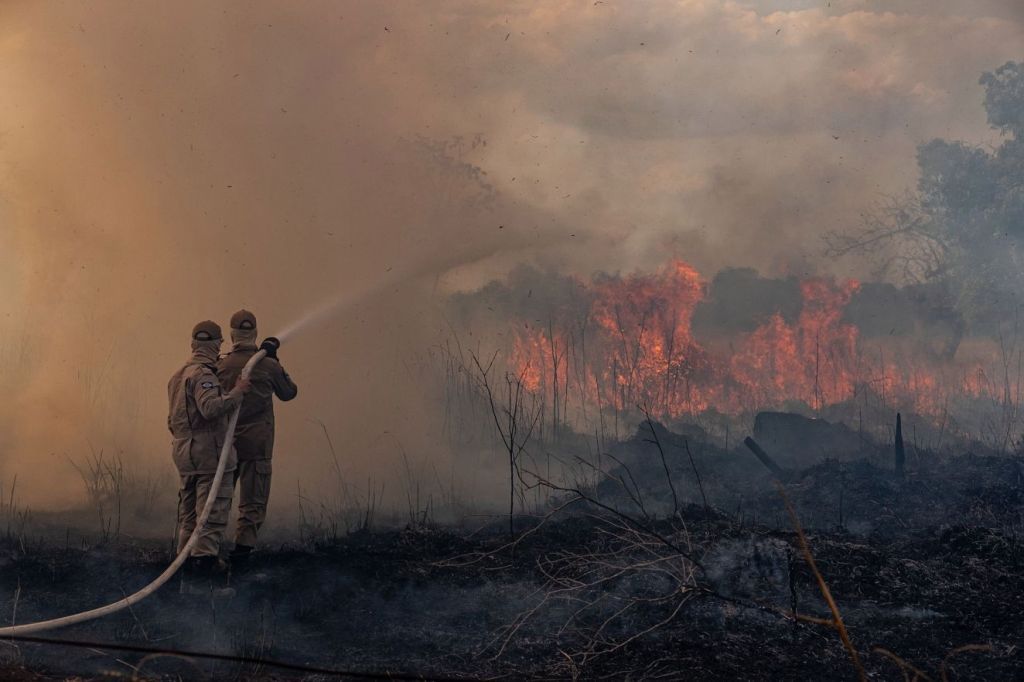
Firefighters combating a fire in the Amazon basin, Mato Grosso State.
Credit: AFP/Getty Images

The Amazon rainforest is undeniably important to our planet. Covering more than 5.5 million square kilometres, it is the largest rainforest in the world, and an ecological powerhouse. It is estimated that 10% of the world’s species are housed in the Amazon, making it one of the most biodiverse places in the world. It also functions as a carbon sink, responsible for absorbing carbon dioxide and diminishing the effects of greenhouse gases on our climate. The fate of the Amazon is thus not the only sole concern of the countries in which it resides, but that of the entire world.

Unfortunately, the past month has seen a higher than average occurrence of forest fires, spurring a surge in news coverage about the Amazon. To make matters worse, there is a slew of misinformation spreading around, due to an understandably growing concern about one of the most ecologically significant rainforests in the world.

To clarify a few points:

  • This is not the first time there have been forest fires in the Amazon. Forest fires can occur naturally during the Amazon’s dry season (although this is rare). More commonly, they are started intentionally, by farmers and loggers, for the purpose of land-clearing.
  • This bout of forest fires, according to satellite imagery, has been the highest number recorded since 2010. In the decade before 2010, there have been even more prolific fires, largely attributed to severe drought.
  • The fires are not entirely destroying pristine rainforest, as some have largely been set on land already delegated and used for agricultural purposes.

Ultimately, the fires in the Amazon have been somewhat misrepresented in its media coverage, and an accurate understanding of how the Amazon functions and the effect of fires on the ecosystem is crucial to managing this issue.

Regardless of whether the impact of the fires has been inflated, the environmental value of the Amazon cannot be underestimated. The Amazon rainforest has not developed resistance to forest fires, and scientists are concerned that unregulated burning and deforestation could have lasting effects. As of now, around 17% of the Amazon has been lost. If this number increases to 20-25%, some scientists postulate that the Amazon will be pushed past the tipping point, entering a “dieback scenario”. To understand what this means, first know that the Amazon recycles its own moisture and produces its own rainfall. Without sufficient vegetation, this cycle is disrupted, killing off trees in a snowballing effect that degrades the forest into savanna. While the exact nature of this “tipping point” remains an uncertainty, the general consensus is that the effects of crossing this point of no return, would be devasting to the environment. The most beneficial path for the Amazon would therefore be to cut back on deforestation, and increase protection for the forested areas.

Of course, the responsibility of protecting the Amazon naturally falls within the purview of the governments of the countries it falls within. And unfortunately, the protection of the Amazon (or any natural habitat for that matter) does not always align with the current governments’ interests. It would be unfair not to mention that Brazil (in which the bulk of the Amazon basin falls) and other Amazonian countries in the recent years have made significant headway in cutting back on deforestation. Costa Rica has doubled its rainforests since 1996. In the past decade, deforestation rates in Brazil dropped by 70% due to stricter environmental protection policies and efficient agricultural practices, and this was accompanied by a healthier economy in Brazil, demonstrating that protection of the Amazon does not lead to a weaker economy – the excuse used by so many supporters of deforestation. Increased protection coupled with sustainable, humane farming and ranching practices can lead to a mutually beneficial relationship between nature and human kind.

However, with the new Brazilian president Jair Bolsonaro taking office, Amazon forest destruction has spiked. Under Bolsonaro, environmental protections have been weakened, and deforestation is progressing faster than it had been the previous year. A direct effect of this is that there are 80% more forest fires now than this same time in 2018, thus leading to a surge in global concern. What is most worrying is not just that the Amazon is being burned, but that the policies put in place to protect it – the policies that were clearly working – are now being rapidly unravelled. Unsurprisingly, international committees and other countries have been placing pressure on Bolsonaro to reverse his stance on environmental protection. However, the issue of whether other nations can dictate what a country can or cannot do within its borders has always been sensitive, and Brazil’s president does not show any signs of retraction.

Ultimately, the Amazon is one of the Earth’s most valuable resources, and what happens to this rainforest has cascading impacts on the rest of the world. The potential devastation would impact Earth’s climate and biodiversity, as well as our carbon and water cycle, not to mention the indigenous people whose lives are most closely tied to the forest. However much we disagree with Bolsonaro, the sobering reality remains that the fate of the Amazon lies in the hands of leaders such as him. The best we can hope for is that the voice of scientists and concerned citizens will change his mind, and pave the way for a brighter future in the Amazon. Simply put, whatever short term benefits deforestation and setting fires may have, cannot justify the devastation of losing the Amazon rainforest – in which not just the Amazonian countries, but the entire world, has a great deal to lose.

Additional Information:

National Geographic:
Provides data on Amazon forest fires. https://www.nationalgeographic.com/environment/2019/08/amazon-fires-cause-deforestation-graphic-map/

Vox:
Covers many aspects of the issue, and provides multiple sources:
https://www.vox.com/energy-and-environment/2019/8/30/20835091/amazon-rainforest-fire-wildfire-bolsonaro

Design a site like this with WordPress.com
Get started