by Goh Sze Lin
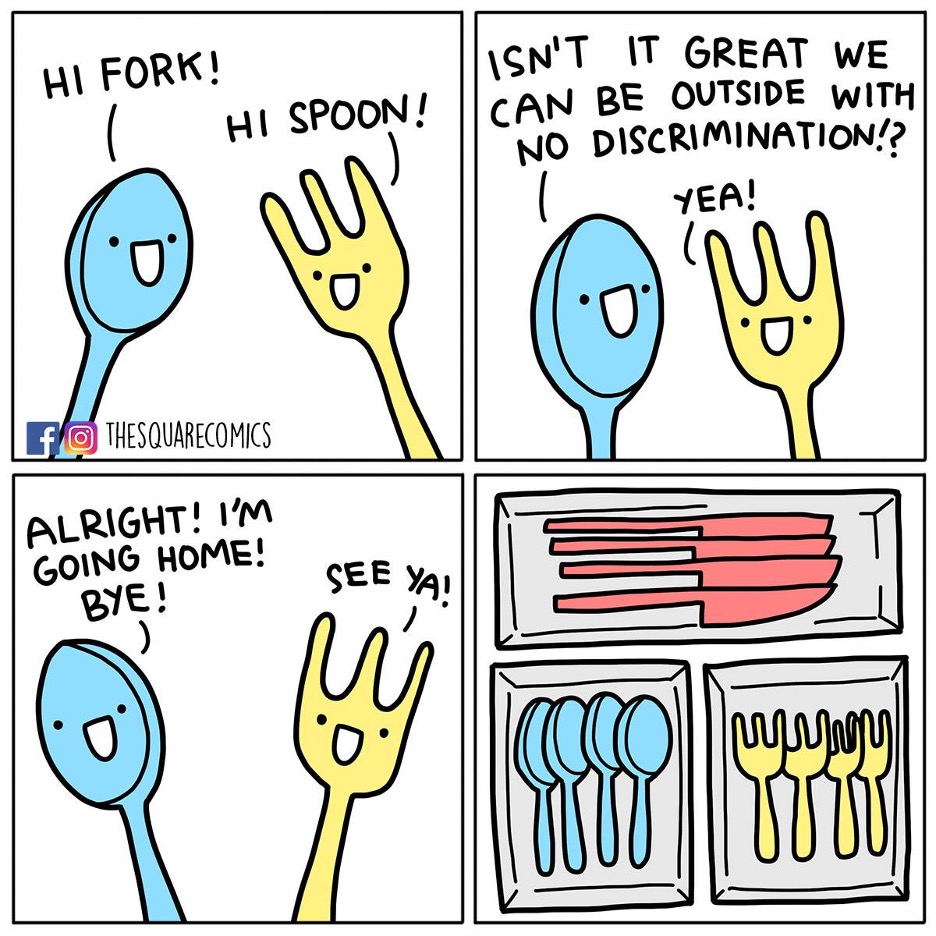
There’s a common saying; if it’s unfair to all, then doesn’t it mean that it’s fair since everyone has an equal footing? I would like to challenge that line of thought. The level of unfairness is different for everyone, and that is especially so in the context of discrimination, where it is undeniable that discrimination puts the minority at a greater disadvantage than the majority. Everyone deserves a chance to have an equal starting point. Therefore, I feel that discrimination should be reduced and even eliminated in society. That brings me to think, is it possible?
Discrimination usually stems from prejudice, and there is bound to have prejudice in every society. Even Singapore, who prides itself as meritocratic and racially harmonious society, is guilty of discrimination. A study by James Cook University showed that Chinese participants rated resumes by Malay applicants as less competent and less suitable for the job while they rated in favour of White applicants. This stems from the negative stereotypes that Malays are less competent and positive stereotypes of Whites as being more intelligent. The positive stereotypes of Whites are likely from the colonial era where Western powers are viewed as more powerful than Eastern ones. This explains the lower median monthly household income in Malay households in Singapore. These stereotypes are dated but still, it seems to be ingrained in us, as can be seen from the study.
That being said, with the rise in social media over the years, more people have been empowered and are given a voice to raise awareness of the issues that they face. This brings more call-to-actions such as Black Lives Matter, #MeToo Movement, pride parades and so on. Movements such as these have incited change. For example, the pride parades have pushed governments to take a new stand and legalise same-sex marriages. So far, 29 countries have legalised same-sex marriage. Another one would be the #MeToo Movement which was initially about sexual harassment which then shifted it’s focus to gender discrimination. The gender discrimination this movement brought forward included the gender wage gap between men and women. The wage gap usually comes from stereotypes and unconscious biases. The movement pushed for equal pay and these voices help to shape new social norms. Managers have become more aware of the unconscious biases that they might have against women, making them more cautious during hiring and promotion practices. Therefore, although reducing discrimination may seem to be a goal faraway, I believe that if we continue to strive to raise awareness of this issue and call for change, society will one day be more accepting and we would all exist as equals who are just unique individuals, and not defined based on box of prejudice people place us in.
References:
https://www.businessinsider.com/where-is-same-sex-marriage-legal-world-2017-11
https://www.payscale.com/data/gender-pay-gap
https://www.wsj.com/articles/what-metoo-has-to-do-with-the-workplace-gender-gap-1540267680
 The Watercooler
Nice article! I also think it’s interesting to point out the difference between treating everyone the same, and making sure everyone gets the same start in life. In other words, the difference between equality and equity is described as: “Although both promote fairness, equality achieves this through treating everyone the same regardless of need, while equity achieves this through treating people differently dependent on need.” Both strategies have the same goal, but perhaps the latter might be more realistic as right now, some marginalised groups are at more of a disadvanatge.
LikeLike
Good article! I think this article comes timely with the recent Women’s rights protest in the United Kingdom, that arose with the recent death of Sarah Everard. Her death called to attention the mistreatment in the UK that continues to persist years after the #MeToo movement, as woman are still asked to sacrifice their liberty for temporary safety. Since the BLM protests, the rights of the minorities and underprivileged in society have been brought to the forefront of our attention, and I believe it is important to continue riding on the momentum for us to hear the voices of the minority, instead of simply sweeping them under the bus.
LikeLike
Thank you for the interesting article! I think it will also be useful for us to brainstorm and start taking steps to promote for equality. This will allow real organic changes to happen in the society.
LikeLike
Good article! I think speaking up more about discriminations is very important to spread awareness about such issues. Though discrimination is an active issue, I don’t think it is a very feasible idea to talk about common ground. This is mainly because not every individual is born into the same circumstances or with the same privileges. I think the most feasible way around would be to accept everyone with their privileges and work towards not actively discriminating against people based on factors beyond their control.
LikeLike