by Victoria Buckland
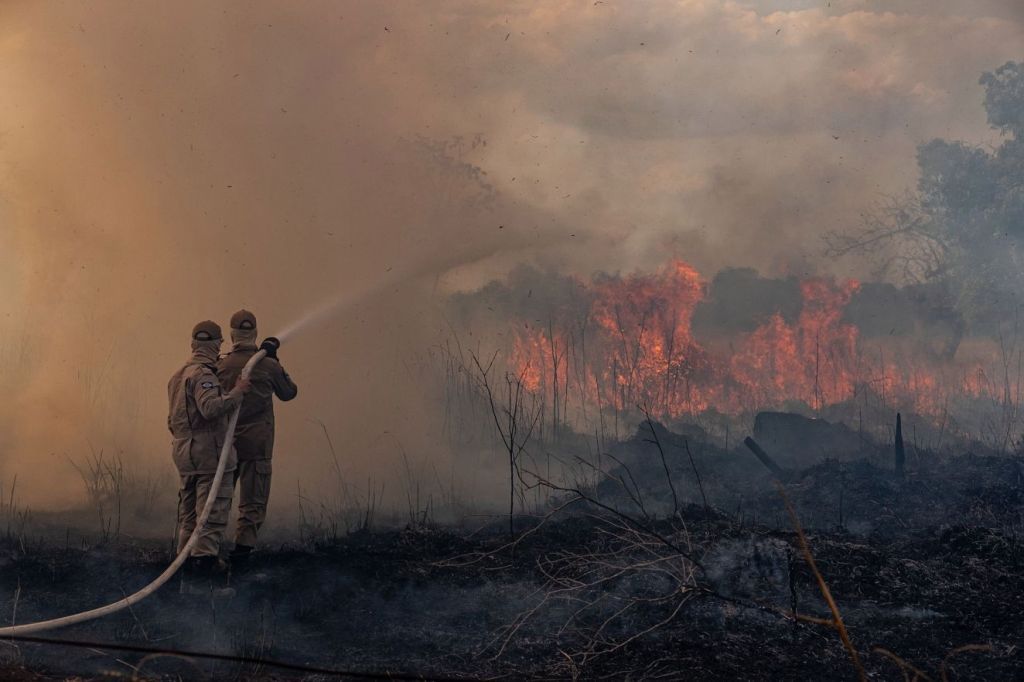
Credit: AFP/Getty Images
The Amazon rainforest is undeniably important to our planet. Covering more than 5.5 million square kilometres, it is the largest rainforest in the world, and an ecological powerhouse. It is estimated that 10% of the world’s species are housed in the Amazon, making it one of the most biodiverse places in the world. It also functions as a carbon sink, responsible for absorbing carbon dioxide and diminishing the effects of greenhouse gases on our climate. The fate of the Amazon is thus not the only sole concern of the countries in which it resides, but that of the entire world.
Unfortunately, the past month has seen a higher than average occurrence of forest fires, spurring a surge in news coverage about the Amazon. To make matters worse, there is a slew of misinformation spreading around, due to an understandably growing concern about one of the most ecologically significant rainforests in the world.
To clarify a few points:
- This is not the first time there have been forest fires in the Amazon. Forest fires can occur naturally during the Amazon’s dry season (although this is rare). More commonly, they are started intentionally, by farmers and loggers, for the purpose of land-clearing.
- This bout of forest fires, according to satellite imagery, has been the highest number recorded since 2010. In the decade before 2010, there have been even more prolific fires, largely attributed to severe drought.
- The fires are not entirely destroying pristine rainforest, as some have largely been set on land already delegated and used for agricultural purposes.
Ultimately, the fires in the Amazon have been somewhat misrepresented in its media coverage, and an accurate understanding of how the Amazon functions and the effect of fires on the ecosystem is crucial to managing this issue.
Regardless of whether the impact of the fires has been inflated, the environmental value of the Amazon cannot be underestimated. The Amazon rainforest has not developed resistance to forest fires, and scientists are concerned that unregulated burning and deforestation could have lasting effects. As of now, around 17% of the Amazon has been lost. If this number increases to 20-25%, some scientists postulate that the Amazon will be pushed past the tipping point, entering a “dieback scenario”. To understand what this means, first know that the Amazon recycles its own moisture and produces its own rainfall. Without sufficient vegetation, this cycle is disrupted, killing off trees in a snowballing effect that degrades the forest into savanna. While the exact nature of this “tipping point” remains an uncertainty, the general consensus is that the effects of crossing this point of no return, would be devasting to the environment. The most beneficial path for the Amazon would therefore be to cut back on deforestation, and increase protection for the forested areas.
Of course, the responsibility of protecting the Amazon naturally falls within the purview of the governments of the countries it falls within. And unfortunately, the protection of the Amazon (or any natural habitat for that matter) does not always align with the current governments’ interests. It would be unfair not to mention that Brazil (in which the bulk of the Amazon basin falls) and other Amazonian countries in the recent years have made significant headway in cutting back on deforestation. Costa Rica has doubled its rainforests since 1996. In the past decade, deforestation rates in Brazil dropped by 70% due to stricter environmental protection policies and efficient agricultural practices, and this was accompanied by a healthier economy in Brazil, demonstrating that protection of the Amazon does not lead to a weaker economy – the excuse used by so many supporters of deforestation. Increased protection coupled with sustainable, humane farming and ranching practices can lead to a mutually beneficial relationship between nature and human kind.
However, with the new Brazilian president Jair Bolsonaro taking office, Amazon forest destruction has spiked. Under Bolsonaro, environmental protections have been weakened, and deforestation is progressing faster than it had been the previous year. A direct effect of this is that there are 80% more forest fires now than this same time in 2018, thus leading to a surge in global concern. What is most worrying is not just that the Amazon is being burned, but that the policies put in place to protect it – the policies that were clearly working – are now being rapidly unravelled. Unsurprisingly, international committees and other countries have been placing pressure on Bolsonaro to reverse his stance on environmental protection. However, the issue of whether other nations can dictate what a country can or cannot do within its borders has always been sensitive, and Brazil’s president does not show any signs of retraction.
Ultimately, the Amazon is one of the Earth’s most valuable resources, and what happens to this rainforest has cascading impacts on the rest of the world. The potential devastation would impact Earth’s climate and biodiversity, as well as our carbon and water cycle, not to mention the indigenous people whose lives are most closely tied to the forest. However much we disagree with Bolsonaro, the sobering reality remains that the fate of the Amazon lies in the hands of leaders such as him. The best we can hope for is that the voice of scientists and concerned citizens will change his mind, and pave the way for a brighter future in the Amazon. Simply put, whatever short term benefits deforestation and setting fires may have, cannot justify the devastation of losing the Amazon rainforest – in which not just the Amazonian countries, but the entire world, has a great deal to lose.
Additional Information:
National Geographic:
Provides data on Amazon forest fires. https://www.nationalgeographic.com/environment/2019/08/amazon-fires-cause-deforestation-graphic-map/
Vox:
Covers many aspects of the issue, and provides multiple sources:
https://www.vox.com/energy-and-environment/2019/8/30/20835091/amazon-rainforest-fire-wildfire-bolsonaro
 The Watercooler
Hello!
From your piece, it is evident that the Amazon rainforest contributes substantially to the ecosystem and to climate regulation around the world. It is important that we all do our part to protect the rainforests of the world.
However, I would like to discuss about a few issues.
(1): Responsibility of governments to maintain the Amazon rainforest:
You mentioned that it will be under the purview of a few counties. However, the global community also has a responsibility to ensure the proper upkeep of the forest as it contributes to climate regulation of the whole world. It is heartening to see government groups such as the G7 stepping up to offer funding. It is unfortunate that Bolsonaro has not accepted the funding so far. As citizens, what we can do is to not elect politicians who show a blatant disregard for the environment or they can put pressure on the government, which may not always be successful.
(2): Clearing our land for agricultural purposes:
While deforestation is at the expense of the environment, we need to consider if we can provide for the livelihood of farmers. Are there alternative means available?
LikeLike
The Amazon is clearly important. But people are not burning forests for no reason, and the governments of developing countries should not be demonised for doing so. The West got to develop and destroy parts of the Earth however they wanted, but now we know more about the climate, we expect other developing governments to have the uptmost respect for the environment and put their own development second. I do think deforestation is a problem and not fair on populations all over the world, but I do not think this is the correct approach to take.
I also think the media roamnticises events like this – to what extent is the coverage of the Amazon recently just trying to create a global hysteria? I think information on the climate needs to be heavily scrutinised because it’s difficult to know what to believe. For example, yes, the number of fires in 2019 is 80% higher than in 2018, but it’s also just 7% higher than the average over the last 10 years ago. Another thing to consider is what is the media agenda here? I don’t know how we can ever know the truth about the Amazon because there are constantly differing fact-based narratives. This makes me reluctant to take any strong stance.
LikeLike
a few thoughts:
– One of the most interesting aspects of this whole situation is regarding the idea of rightful ownership of the rainforest. The President, Jair Bolsonaro, has repeatedly said that international calls for the conservation of the rainforest violate Brazil’s sovereignty and has compared them to colonialism. It is an argument that often comes up when talking about developing countries. Countries such as the US and UK developed on the back of exploitation of natural resources, so it is unfair and hypocritical for them to sanction developing countries doing the same now.
– The attitude of the Brazilian public doesn’t seem to align with the shock and horror of those watching from outside. The people of Brazil elected Bolsonaro, whose campaign was centered around stimulating the economy through use of the rainforest. Nearly half of Brazil’s exports are from agribusiness, so it isn’t difficult to understand why farmers and ranchers would be keen to burn the forest to make more space. In addition, the fact that new fires were lit after Brazil issued a burning ban shows that the administration alone shouldn’t be held responsible.
On a personal level, I feel that conservation of our natural resources should always be the first priority. While I understand the concerns of the people in Brazil’s agricultural sector, the fact is that the deterioration of the amazon affects the air quality of the entire world. I believe international action is important for the maintenance of the Amazon ecosystem. This would upset those engaged in agriculture, but as Dilip mentioned in his comment, finding alternative sources of livelihood for them may be a step towards solving this problem.
LikeLike
The role of eco-facism in the instance of the Amazon fires, is a factor that should not be underestimated nor undermined.
Bolsonaro’s electoral campaign and aims this year made it clear that the lives of indigenous communities were expendable for the economic gains of the Brazilian. Rather the exploitation of native territory was rooted in facist policies that sought to push out communities for farm land and the wider production industries.
in 2017 Bolsonaro was quoted saying “Where there is Indigenous land, there is wealth beneath it”. In treating media narrative of the amazon fires as battle ground between new age industrial policies and environmental protectionism, indigenous communities have led the fight against environmental terrorism. Prominent youth activist Rayanne Cristine Maximo Franca, commented on the climate surrounding the fight for environmental rights and lives. “Women from the Amazon have been echoing a strong urge to act against fast-tracked consumerist needs that do not respect our lands, our culture, our rights”, and as Franca captured; the resistance against eco-facism is a necessity.
Economic exploitation of land is not a new phenomenon, and neither is the exploitation of indigenous land. But in the narratives of the threats of climate change and deforestation in Brazil, the positioning of indigenous lives within the arguments should not be forgotten.
References:
https://www.dazeddigital.com/politics/article/45703/1/the-fight-to-save-the-amazon-rainforest-youth-activist-protest
https://www.cbc.ca/news/indigenous/amazon-brazil-wildfires-indigenous-rights-1.5258075
LikeLike
It is quite unfortunate to hear about the new President taking less initiatives to conserve the Amazon forest as compared to his predecessor. I can only hope that there are more communities reaching out to him to voice their concerns regarding the environment – the more urgent, the better.
LikeLike
I think deep down, most people would prefer an Amazon forest that’s not burning to a crisp. But it’s usually
placed low on their list of priorities, below jobs, healthcare, security, civil rights, etc
But there’s a few problems with that, using the Amazon fires as a example:
1.) The fires have spread massive smoke clouding cities in Brazil and causing breathing problems[1]
2.) Deforestation by farmers frequently invade into indigenous territory, purposefully for profit[2]
3.) The farmers’ motive for this is not to fulfill sustenance for the people, but to satisfy the ever-growing beef
industry[3] Brazil’s Amazon area is the largest beef exporter in the world, while millions remain malnourished[4],
suggesting the problem isn’t a lack of food, but a systemic problem in distributing it.
4.) Bolsonaro recently fired the director of Brazil’s space agency INPE after doubting (without proof) the climate data
the institute had released.[5]
5.) The 2018 election that put Bolsonaro into office is one of Brazil’s most violent, with militias frequently threatening supporters
of opposing parties, while Bolsonaro has publicly voiced supprot for them.[6] In addition, an investigation by The Intercept revealed
the false corruption charges of popular opposing politician Lula de Silva.[7]
People across world are slowly realizing the dirty little secret: the same conditions that has made the Amazon open for exploitation are the same that’s causing all the other problems that we typically point to as “more pressing than the environment”
In the US, the Green New Deal has been gaining traction, a legislation tackling issues ranging from removing emission from industry while providing green jobs with minimum wage and guaranteed healthcare,
to overhauling public transport, access to clean air, water and food, and so on under the keen awareness that these problems are deeply connected with each other, and that only an overarching solution which seeks to tackle the economic foundations in which income inequality and climate change are allowed fester will succeed.
And the UK’s Labour party is following suit.[8] It’s time the rest of the world joins the party.
[1]https://www.reuters.com/article/brazil-wildfire-health-children/fire-hazard-children-struggle-to-breathe-as-smoke-chokes-amazon-city-idUSL5N25T45A
[2]https://theintercept.com/2019/07/06/brazil-amazon-rainforest-indigenous-conservation-agribusiness-ranching/
[3]https://www.citylab.com/environment/2019/08/amazon-rainforest-fire-map-burning-bolsonaro-deforestation-map/596605/
[4]https://www.independent.co.uk/news/world/americas/bolsonaro-brazil-hunger-starvation-malnourished-lie-far-right-a9013271.html
[5]https://www.reuters.com/article/us-brazil-environment-wildfires/amazon-burning-brazil-reports-highest-forest-fires-since-2010-idUSKCN1VA1UK
[5]https://www.jacobinmag.com/2019/06/colombia-paramilitaries-bolsonaro-militias-fascism
[6]https://www.reuters.com/article/us-brazil-environment-wildfires/amazon-burning-brazil-reports-highest-forest-fires-since-2010-idUSKCN1VA1UK
[7]https://theintercept.com/2019/06/09/brazil-archive-operation-car-wash/
[8]https://jacobinmag.com/2019/05/john-mcdonnell-labour-green-industrial-revolution
LikeLike